E-2 Case Study: Ontario Family Ope
+Canada (Ontario)+
+Family Business Owners+
+E-2 Treaty Investor Visa+
Client Profile
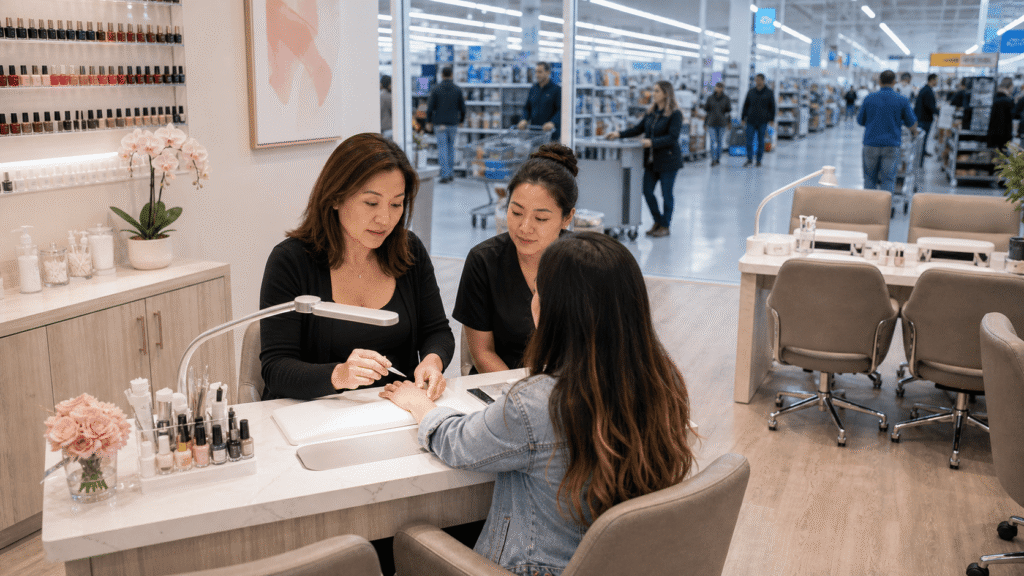
Our clients were based in Ontario and pursued an E-2 using a familiar business model: a nail salon.
A key detail here was their experience: the spouse had previously operated her own nail salon in Canada, so the family understood the business, margins, and what it takes to manage day-to-day operations.
The Challenge
Starting a service business is often less about “having an idea” and more about securing the right location—one that supports steady customer traffic and can be supported with a clear operational plan.
The Approach
The business was set up through a lease inside a Walmart superstore, using the small retail/service spaces often located near the front of the store. The Walmart environment provided built-in traffic patterns that supported the business model and made the plan easier to justify from a practical standpoint.
The Result
Canadian clients have successfully invested in retail/service formats for the E-2, using a business model that is straightforward to explain at the embassy and grounded in prior experience.
Looking Forward
For businesses like this, the next steps are typically operational: hiring, training, systems, service quality, and consistent revenue—so that the business remains stable for an E-2 extension.
Key takeaway: Prior experience + a good location with predictable foot traffic can make a service-based E-2 business plan much more credible.